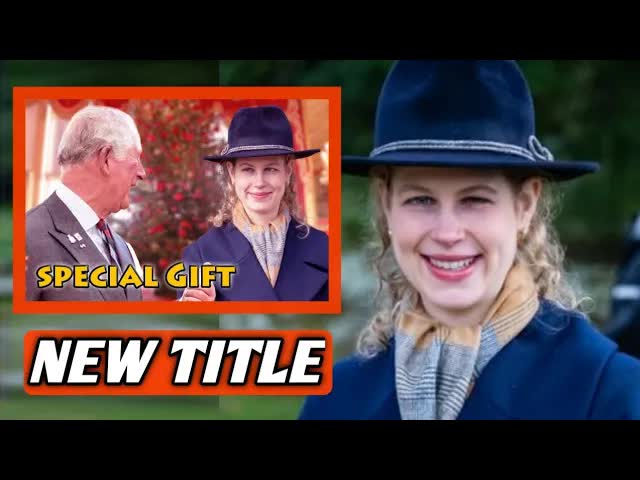
Lady Louise Mountbatten-Windsor, the youngest granddaughter of the late Queen Elizabeth II and Prince Philip, is currently immersed in her studies at the University of St Andrews.
As she prepares for her summer exams, discussions surrounding her royal title are gaining momentum.
With a few years left until she graduates, the prospect of her stepping into the role of a working royal seems to be on hold for now.
The ongoing conversation about her title is fueled by the letters patent established in 1917, which outlines who can hold royal titles.
These historic rules, once overlooked, have gained significant attention in recent years.
They raise an intriguing question: could Lady Louise one day be known as Princess instead of simply Lady?
To understand this, we need to delve into the letters patent issued by King George V. Created during World War I, when many royals were losing their thrones, these regulations have become a hot topic in royal discourse today.
Essentially, they state that the children of a monarch are granted the title of His Royal Highness, while the same applies to male-line grandchildren.
It’s a rather archaic rule that continues to favor males over females, even in 2023.
This means that while the children of Queen Elizabeth II’s sons—Charles and Andrew—were given royal titles from birth, the situation is different for her daughter’s children.
In 1999, when Prince Edward, the Queen’s youngest son, married Sophie Rhys-Jones, it was announced that their children would not receive the title of His Royal Highness.
This decision was made in the wake of public sentiment following the death of Diana, Princess of Wales, and the royal family’s handling of her title after her divorce.
When Edward and Sophie welcomed their first child in 2003, Lady Louise Mountbatten-Windsor was introduced to the world.
Her younger brother, James, born in 2007, received the courtesy title of Viscount Severn.
Fast forward to March 2023, when Edward was elevated to the Duke of Edinburgh by King Charles; however, Louise’s title remained unchanged.
Despite being the daughter of a Duke, Louise is still known as Lady.
Yet, the debate lingers: could both she and her brother eventually claim the title of His Royal Highness?
Their mother, Sophie, has hinted that the option exists.
Prior to Louise’s 18th birthday, she mentioned that her daughter could adopt the title if she chose to, but Louise opted to remain a Lady.
Some experts argue that the decision made at the time of Edward and Sophie’s marriage is a firm ruling, effectively closing the door on the possibility of royal titles for Louise and James.
Meanwhile, there’s growing speculation that Lady Louise may be called upon to take on royal duties in the future.
With the number of active royals dwindling, the need for fresh faces to fill engagements is becoming increasingly urgent.
The Duke of Kent and his sister, Princess Alexandra, are both in their late eighties, and their ability to fulfill royal responsibilities is likely to diminish.
The Duke and Duchess of Gloucester are in their seventies, and Princess Anne recently celebrated her 72nd birthday.
Looking ahead, the royal family may face challenges in maintaining a full calendar of engagements.
On the day Lady Louise turned 20, her cousin, the Prince of Wales, articulated a desire for meaningful social change, emphasizing a focus on fewer issues with deeper engagement.
It’s uncertain whether this vision will extend to the rest of the royal family or if it will result in increased responsibilities for others.
For now, Lady Louise is likely enjoying her youth, savoring experiences typical for a 20-year-old, away from the prying eyes of the public.
Interestingly, her lack of a royal title has provided her with a layer of privacy that many young royals often seek.
The tension between maintaining personal privacy and fulfilling royal duties remains a delicate balance.
As discussions about her potential title continue, one thing is clear: Lady Louise’s journey within the royal family is just beginning, and the choices she makes in the coming years could shape her future in ways we can only speculate about.